
 EN
EN
 ar
ar bg
bg hr
hr cs
cs da
da nl
nl fi
fi fr
fr de
de el
el hi
hi it
it ko
ko no
no pl
pl pt
pt ro
ro ru
ru es
es sv
sv tl
tl iw
iw id
id lv
lv lt
lt sr
sr sk
sk sl
sl uk
uk vi
vi et
et hu
hu th
th tr
tr fa
fa ms
ms hy
hy ka
ka ur
ur bn
bn mn
mn ta
ta kk
kk uz
uz ku
ku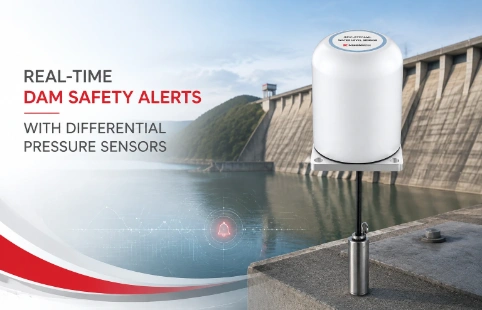
Real-Time Dam Safety Alerts with Differential Pressure Water Level Sensors
Key Takeaways An alert chain needs more than a sensor: define field in...

Load Cell Specifications: Key Parameters That Matter
When engineers compare load cells, they’re really looking at a handful of numbers: capacity, accuracy, temperature coefficients, and signal output. These specs tell you whether a sensor will hold up in a dam anchor monitoring setup or a mine slope stability system. A 20 kN unit with 0.05% nonlinearity might be perfect for a rock bolt pull test, while a 5000 kN annular cell needs different creep characteristics for long-term tunnel lining surveillance. Kingmarch focuses on load cells built for these exact scenarios, offering transparent spec sheets that let you match the sensor to the actual site conditions—not just a datasheet average. The goal is to skip the guesswork: if you know your expected load range, environmental exposure, and data logger input type, the right specification almost selects itself.
Technical Detail
In geotechnical monitoring, load cell specifications aren’t just paper numbers—they’re your primary defense against sensor drift, signal corruption, or early failure in the field. Kingmarch load cells cover a wide capacity spectrum, typically from 10 kN to over 10000 kN, using bonded foil strain gauge technology. Accuracy class aligns with OIML C3 (around 0.02% of rated output) for many models, with options to tighten non-linearity and hysteresis for high-precision applications like pile testing. Temperature compensation is standard from -20°C to +60°C, and we often extend this range upon request for permafrost or desert installations. Output signals are a practical differentiator. Most Kingmarch load cells provide a millivolt bridge (2 mV/V at full scale), but we also integrate inline amplifiers to deliver 4-20 mA, 0-5 V, or RS485 digital outputs. This makes them a plug-and-play match with Campbell Scientific dataloggers, wireless nodes, or automated total station systems. Mechanical specifications like stainless steel construction and IP67/IP68 sealing ensure long-term survival when embedded in concrete or buried in saturated soil. Custom bolt patterns, cable lengths, and connector types are all part of our standard engineering dialogue—because a spec that looks perfect on screen still needs to fit the physical world you’re instrumenting.
News
Key Takeaways An alert chain needs more than a sensor: define field in...
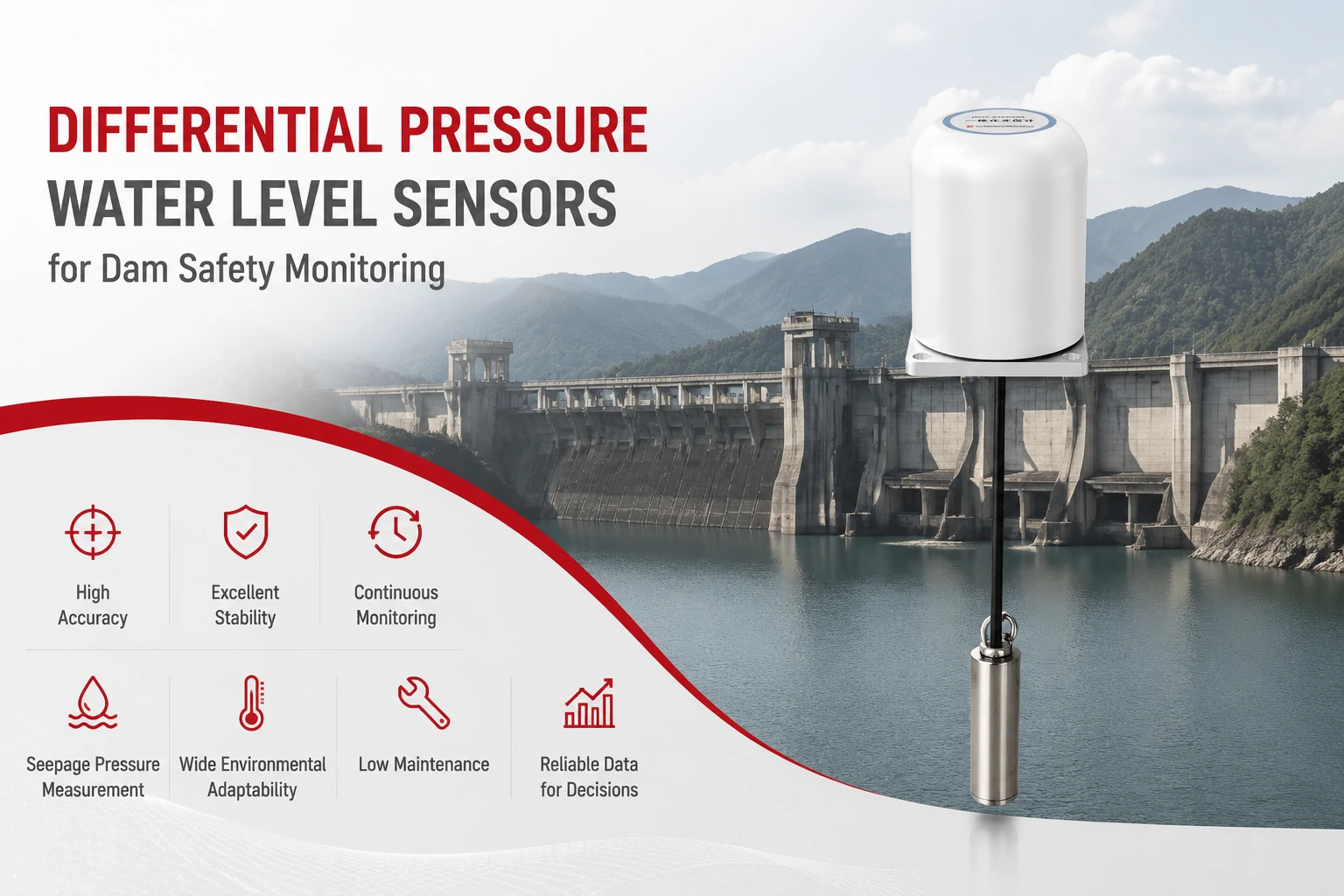
Key Takeaways The strongest fit is usually a confined, submerged, or s...
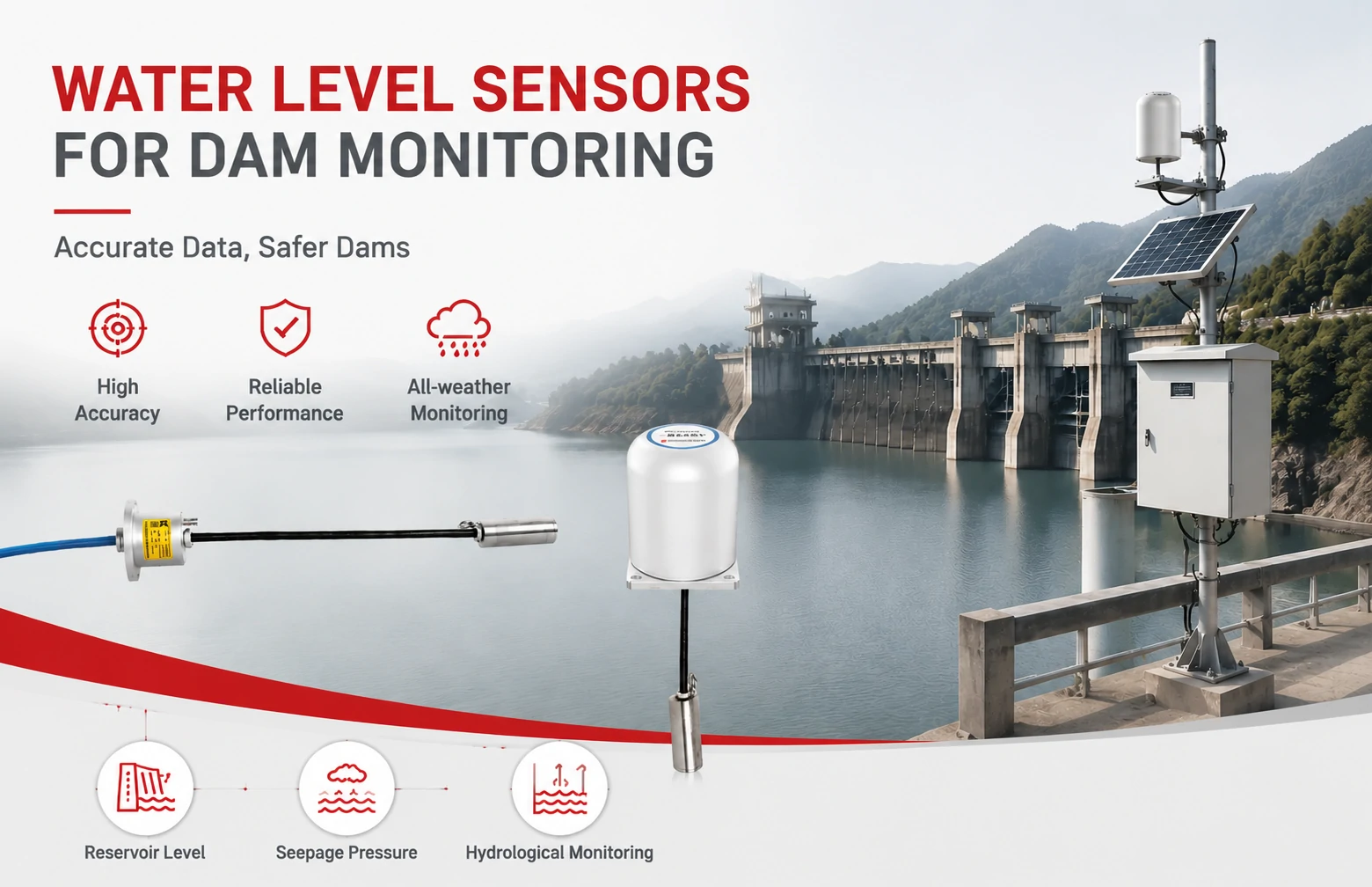
Kingmach Water Level Sensors for Dam Monitoring: A Buyer's Guide to Differential Pre...
Products
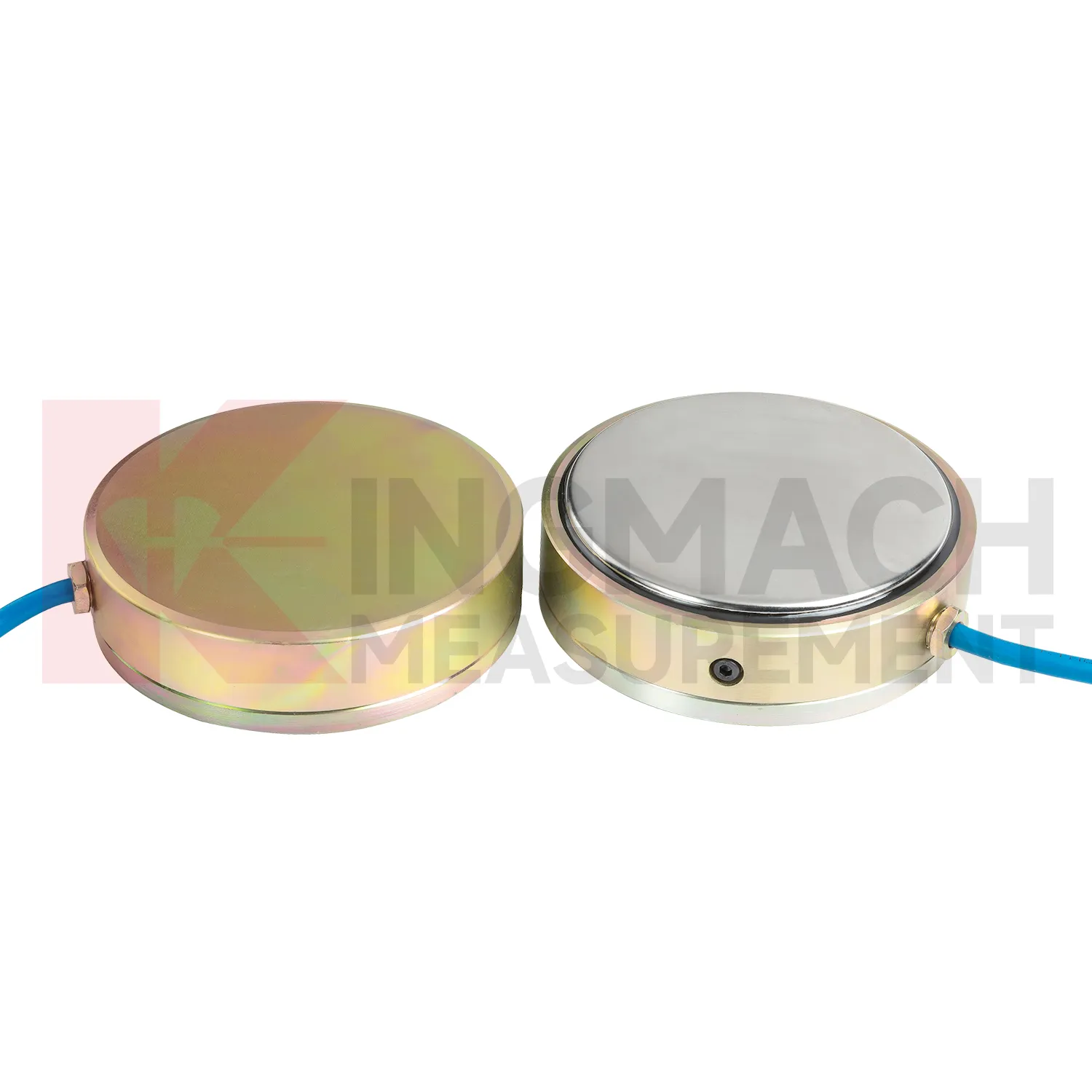
Large Earth Pressure Cell ( VW & Smart Type) JMZX-51XXAT/ ATM
View Details
Smart Vibrating Wire PiezometerSmart Piezometers (VW) JMZX-55XXHAT
View DetailsEarth Pressure Cell ( VW & Smart Type) JMZX-50XXAT/ ATM
View DetailsFAQ
mV/V (millivolt per volt) is the raw strain gauge signal, typically 2 mV/V. It needs a sensitive readout box. 4-20 mA is an amplified current loop that travels farther without electrical noise, and it’s handy because you can detect cable breaks (zero current). RS485 is a digital protocol like Modbus—good for daisy-chaining multiple sensors onto a single bus and integrating directly into a SCADA or cloud logger. Kingmarch can supply any of these depending on your monitoring system.
Start with the working load of the anchor, then add a safety factor. For ground anchors, the design load often ranges from 100 kN to 2000 kN. You’d size the load cell so the expected maximum is about 70%–80% of its rated capacity to avoid overloading while keeping good resolution. If you’re unsure, provide the anchor type and strand count—Kingmarch engineers normally help with the selection.
Yes, they are. Analog mV/V types work with almost any strain gauge logger (Vishay, Geokon, RST, etc.), while the 4-20 mA and RS485 versions connect to general-purpose industrial PLCs, SCADA, and wireless nodes. The spec sheet always includes wiring codes and calibration factors to simplify setup.
IP68 means the cell is dust-tight and can handle continuous immersion in water beyond 1 meter depth, under conditions specified by the manufacturer. In practice, Kingmarch IP68 load cells use double-sealed cable glands and fully welded housings. This is critical for long-term soil nail or basement monitoring where the sensor sits in wet clay year-round.
Absolutely. Center-hole and annular load cells are standard for rock bolts and tiebacks. Kingmarch regularly modifies inner diameters, outer dimensions, and loading platens to fit existing hydraulic jacks and bearing plates. Just share the mechanical drawings of your anchoring system, and we’ll confirm the feasible modifications.
Share your product type, target capacity, and application requirements. Our team can review the details and recommend a practical next step.
If you are interested in our products or want to become our partner.
Please leave your contact information, our team will contact you as soon as possible.
Mail: [email protected]
Contact Us: +8613808434127
Address: No. 188 Tongzipo West Rd, Changsha, Hunan, China